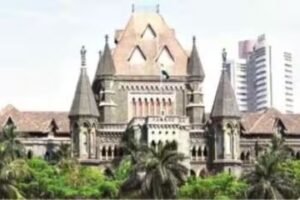
Deemed One-Year Practice Exemption Only for Law Graduates Who Passed Out Before 22 August 2025, Rules Bombay High Court in Satish Maulyawan Patole v. State of Maharashtra
Case: Satish Maulyawan Patole v. State of Maharashtra and Others (with Jinesh Jitendra Koli v. State of Maharashtra and Others)
Citation: 2026:BHC-AS:45143-DB
Date of Judgment: 05 November 2026
Court: High Court of Bombay
Coram: Justice Sarang V. Kotwal and Justice Ranjitsinha Raja Bhonsale
Proceedings: Writ Petition No. 15159 of 2026 and Writ Petition No. 15160 of 2026
Court Observation
“Paragraph No.74 of Bhumika Trust case is a complete answer to the arguments advanced by the Petitioners. There it is specifically mentioned that, every candidate seeking to appear for examination for appointment as C.J.J.D. shall possess at least one year of actual practice from the source and certification as laid down in directions 7 and 8 of the Judgment under Review.”
Summary
The Bombay High Court has upheld the Maharashtra Public Service Commission’s corrigendum restricting the benefit of deemed completion of one year of active legal practice in the Civil Judge (Junior Division) and Judicial Magistrate First Class recruitment to law graduates who obtained their degrees before 22 August 2025. The Court held that the Supreme Court’s directions in Bhumika Trust v. Union of India must be read as a whole and do not exempt all law graduates from the requirement of one year of actual practice.
The petitioners, who obtained their law degrees in 2026 and enrolled as advocates on 20 June 2026, had argued that one paragraph of the Bhumika Trust judgment applies to “all law graduates” during the transitional period up to 31 March 2027, while the paragraph requiring one year of practice governs only advertisements issued on or after 1 April 2027. The Court rejected the argument, holding that there is no distinction between “law graduates” and “candidates” in the Supreme Court’s directions, and that every candidate must possess at least one year of actual practice. The corrigendum dated 23 October 2026 complies with the Supreme Court’s directions, and both writ petitions were dismissed.
Key Holdings
- The Supreme Court’s direction in Bhumika Trust v. Union of India that “all law graduates” are eligible for Civil Judge (Junior Division) recruitment cannot be read in isolation from the one-year practice requirement — the directions must be read as a whole.
- There is no distinction between “law graduates” and “candidates” in the Bhumika Trust directions; paragraph 74 requires every candidate to possess at least one year of actual practice.
- The deemed one-year practice benefit applies only to law graduates who obtained their degrees before 22 August 2025, one year having elapsed since the judgment under review; 2026 graduates enrolled as advocates on 20 June 2026 do not qualify.
- The Maharashtra Public Service Commission’s corrigendum dated 23 October 2026 complies with the Supreme Court’s directions; any contrary direction would violate them.
Directions Issued
- Both writ petitions stand dismissed and the rule is discharged; the Commission’s cut-off stands — only graduates with degrees obtained before 22 August 2025 may apply (applications 26 October to 9 November 2026) for the Civil Judge (Junior Division) and Judicial Magistrate First Class Preliminary Examination 2024 (Advertisement No. 013/2026, issued 30 April 2026).
Background
Satish Maulyawan Patole and Jinesh Jitendra Koli obtained their law degrees in 2026 and enrolled as advocates on 20 June 2026. They challenged the Maharashtra Public Service Commission’s corrigendum of 23 October 2026, issued in connection with the recruitment examination for Civil Judge (Junior Division) and Judicial Magistrate First Class, seeking permission to participate in the selection process. The corrigendum followed the Supreme Court’s 21 August 2026 judgment in Bhumika Trust, which itself followed the Court’s 2025 judgment in All India Judges Association restoring the requirement of three years’ practice for candidates seeking appointment as Civil Judge (Junior Division). The High Court examined both Supreme Court decisions and declined to interfere with the corrigendum.
Related Articles
- Delhi High Court Dismisses Pleas Challenging Final Answer Keys Of Delhi Judicial Service Preliminary Examination 2022
- Uttar Pradesh Judicial Service Civil Judge (Junior Division) Examination 2022
Judgment Link: Read the full judgment (PDF)
Disclaimer: This is a summary prepared for informational purposes only and does not constitute legal advice. Readers should refer to the official judgment for the authoritative text.