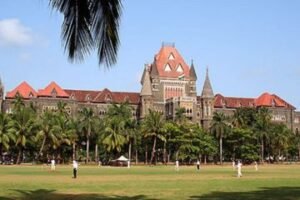
Hospital’s Surplus Alone Does Not Prove a Profit Motive, Rules Bombay High Court in Breach Candy Hospital Trust v. Chief Commissioner of Income Tax
Case: Breach Candy Hospital Trust v. Chief Commissioner of Income Tax and Others
Date of Judgment: 12 October 2026
Court: High Court of Judicature at Bombay
Coram: Justice B. P. Colabawalla and Justice Farhan P. Dubash
Proceedings: Writ Petition No. 2462 of 2010 with Writ Petition No. 1051 of 2013
Court Observation
“A surplus can nevertheless be evidence of a profit purpose, particularly where the pattern of receipts, charges, expenditure and deployment supports that inference. Its existence is relevant, but not conclusive.”
Summary
Breach Candy Hospital Trust, a public trust since 1946 that had enjoyed exemption under Section 10(22A) and approval under Section 10(23C)(via) of the Income-tax Act, 1961 for Assessment Years 1999-2000 to 2001-02, saw its approval applications for Assessment Years 2002-03 to 2010-11 and for Assessment Year 2011-12 onwards rejected by the Chief Commissioner of Income-tax (orders dated 15 April 2010 and 28 September 2012). The rejections held that the Trust did not exist solely for philanthropic purposes and not for profit, citing substantial surpluses, a small proportion of free and concessional treatment, the engagement of paid consultants, and consultation-room and professional-fee arrangements.
A Division Bench of the Bombay High Court quashed both rejection orders. It held that a surplus alone does not establish a profit purpose; the inquiry must examine the institution’s purpose, its actual conduct, and the use of its receipts. The Court directed the competent authority to grant the approvals.
Key Holdings
- “Not for purposes of profit” in Section 10(23C)(via) requires an examination of the institution’s purpose and actual conduct; charging patients, engaging paid consultants, and earning surpluses do not by themselves defeat philanthropic status.
- The provision does not require a hospital’s receipts and expenditure to balance exactly at the end of every financial year; income may be applied or accumulated for the institution’s objects subject to the statutory safeguards — surplus’s existence is relevant, but not conclusive.
- The Trust’s constitutional documents dedicated its income to its objects, prohibited distribution to members, and dedicated residual assets to charity; the impugned orders found no diversion of funds for private benefit or unrelated commercial activities.
- Though the extent and genuineness of free or concessional treatment may be relevant, the provision prescribes no minimum ratio of such expenditure to gross receipts; the Revenue had identified no discrepancy in the Trust’s compliance with the charitable hospital scheme approved by the High Court on 17 August 2006 under Section 41AA of the Bombay Public Trusts Act, 1950.
- Collecting professional fees from patients on behalf of consultants, while retaining 10 per cent towards facilities and services, was not a distribution of profits; philanthropy is not confined to free treatment — specialist care, modern equipment and skilled staff may equally serve philanthropic purposes.
Directions Issued
- The competent income-tax authority was directed to grant approval under Section 10(23C)(via) for Assessment Years 2002-03 to 2010-11 and Assessment Years 2011-12 to 2021-22, within eight weeks of the judgment being uploaded on the High Court’s website; compliance was listed for 14 December 2026; no order as to costs.
Background
The Trust’s applications for approval were rejected by the Chief Commissioner in 2010 and 2012 after scrutiny of its surpluses, free-treatment proportions and consultant arrangements. The Trust challenged both rejections in writ petitions filed in 2010 and 2013; the petitions were heard, reserved on 17 September 2026, and decided by the Division Bench on 12 October 2026.
Disclaimer: This is a summary prepared for informational purposes only and does not constitute legal advice. Readers should refer to the official judgment for the authoritative text.