Housing Society Not Liable for Developer’s RERA Obligations, Rules Bombay High Court in Maruthi Co-operative Housing Society v. Tridhaatu Maruthi Developers
Case: Maruthi Co-operative Housing Society Limited v. Tridhaatu Maruthi Developers LLP
Citation: 2026:BHC-OS:22683
Date of Judgment: 16 October 2026
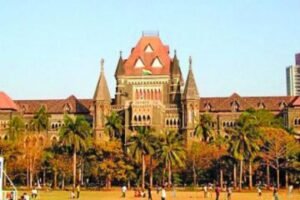
Court: High Court of Bombay
Coram: Justice Arun R. Pedneker
Proceedings: Commercial Arbitration Petition (L) No. 26942 of 2026, under Section 9 of the Arbitration and Conciliation Act, 1996
Court Observation
“However, none of the provisions of RERA renders the owner of the freehold or leasehold interest in the land, who enters into a development agreement with a developer, liable for discharging the developer’s obligations under RERA merely because the developer subsequently enters into agreements for sale with third-party flat purchasers on the basis of such development agreement.”
Summary
The Bombay High Court has granted interim relief to the Maruthi Co-operative Housing Society of Chembur, Mumbai, allowing it to replace a developer that abandoned a redevelopment project more than a decade after 22 families vacated their homes. The Court held that a housing society, as landowner, cannot be treated as a “promoter” under the Real Estate (Regulation and Development) Act, 2016 and made to discharge the defaulting developer’s obligations to third-party flat purchasers.
The Court found that the developer had built only a bare structure up to the tenth floor — beyond the permitted eight floors — before abandoning the site and stopping transit-rent payments, leaving arrears of over Rs. 7.35 crore. Noting that most members are senior citizens paying for alternative accommodation out of their own pockets, the Court held the society had established a strong prima facie case for protection.
Key Holdings
- A housing society that enters into a development agreement as landowner is not a “promoter” under Section 2(zk) of RERA merely because the developer later sells flats to third parties; the society is not liable for the developer’s RERA obligations.
- The developer’s remedy, if any, lies in arbitration for its monetary claims; it cannot insist on preserving the development agreement merely to retain contractual rights after abandoning the project and leaving transit rent unpaid.
- The rights of third-party flat purchasers who entered into agreements with the developer could not, in the circumstances of the case, survive the termination of the development agreement.
Directions Issued
- The society was permitted to proceed with the redevelopment and appoint a new developer, clearing the path to invite fresh proposals and deal with the stalled skeletal structure.
- The developer was directed to pay Rs. 7,35,07,670 in transit-rent arrears and clear Rs. 1,10,76,852 in statutory dues.
- The society must issue a notice invoking arbitration within 30 days; if the developer does not consent to an arbitrator within the prescribed period, the society must approach the Court for appointment within a further 60 days, failing which the interim order will automatically stand vacated.
Background
Under a development agreement dated 10 July 2013, Tridhaatu Maruthi Developers LLP undertook to redevelop “Shobha”, a residential building in Chembur constructed in 1967. All 22 member families vacated in May–June 2014 expecting new homes within about two years, but the project stalled, transit rent stopped, and the developer eventually abandoned the site. The society terminated the agreement and the power of attorney in 2026 and approached the High Court after a MahaRERA order of April 2025 had held it jointly liable as a “promoter”. The matter proceeded ex parte as the developer did not appear, and the Court appointed an amicus curiae to assist.
Disclaimer: This is a summary prepared for informational purposes only and does not constitute legal advice. Readers should refer to the official judgment for the authoritative text.