Supreme Court Contempt Action on NCERT Textbook: Free Speech Boundaries, Curriculum Guidelines, and Lessons for Educators
Written by Ms Mahima Chopra
Table of Contents
- Factual Background: The Textbook Content and Initial Reaction
- Free Speech Limits: Contempt Powers vs Article 19(1)(a)
- Textbook Guidelines: NCERT’s Role and Regulatory Framework
- Educator Takeaways: Practical Implications for Schools and Teachers
- Broader Implications: Judicial Sensitivity and Public Discourse
- Conclusion
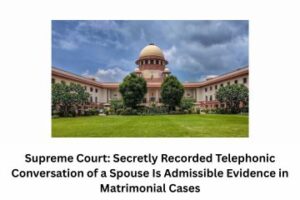
India’s judiciary, as the guardian of constitutional values, has long navigated tensions between institutional integrity and the right to critique. The Supreme Court’s February 2026 suo motu contempt proceedings against an NCERT Class 8 Social Science textbook—triggered by references to “corruption in the judiciary”—bring these tensions to the forefront. This episode raises fundamental questions about free speech limits in educational content, the scope of judicial contempt powers, and the role of textbook publishers in shaping public discourse on governance institutions.
The controversy erupted when Chief Justice Surya Kant’s bench took note of a chapter titled “The Role of the Judiciary in Our Society,” which listed “corruption at various levels of the judiciary” alongside case backlogs and inadequate infrastructure as key challenges facing the judicial system. The Court described the inclusion as a “deliberate and calculated measure” to defame the institution, issuing contempt notices and directing the seizure of physical copies, removal of digital versions, and a ban on republication. This response, while protective of judicial dignity, has sparked debate on whether it oversteps into prior restraint on expression—a domain courts have historically approached cautiously.
Factual Background: The Textbook Content and Initial Reaction
The NCERT textbook in question, published for Class 8 students, aimed to educate on the judiciary’s structure, functions, and challenges. The contentious section highlighted systemic issues: massive case pendency due to insufficient judges, complex procedures, and poor infrastructure; a code of conduct for judges; and accountability mechanisms like parliamentary impeachment for serious misconduct. It explicitly mentioned “corruption at various levels of the judiciary” as one challenge, supported by data on pending cases and references to grievance redress systems like CPGRAMS.
Senior advocates, including Kapil Sibal and Abhishek Manu Singhvi, brought the matter to the Court’s attention, arguing it undermined public confidence in the judiciary. CJI Surya Kant, speaking for a bench comprising Justices Joymalya Bagchi and Vipul M Pancholi, expressed dismay: “I am getting many calls about this… High Court judges are perturbed… I will not allow anyone to play with the integrity of this country.” The Court registered the matter as In Re: Social Science Text Book for Grade 8 (Part 2) Published by NCERT and Ancillary Issues, scheduled hearings for February 26, 2026, and criticised NCERT’s response as lacking introspection.
This was not isolated; a former NCERT official soon petitioned against similar content in another Class 8 textbook, indicating broader concerns over curriculum content. The episode echoes past judicial interventions, such as the 2019 contempt action against a cartoonist for depicting the Court, but here involves public education materials reaching millions of schoolchildren.
Free Speech Limits: Contempt Powers vs Article 19(1)(a)
At the heart of the controversy is the collision between Article 19(1)(a)’s guarantee of free speech and the judiciary’s contempt jurisdiction under Article 129 (Supreme Court) and Section 2(c) of the Contempt of Courts Act, 1971. “Scandalising the court”—lowering judicial authority in public eyes—is punishable, but courts have narrowed it to protect robust criticism while barring scurrilous attacks.
The textbook’s reference, while blunt, was factual and contextual: it paired corruption with structural reforms and accountability, not as an unsubstantiated smear. Critics argue this falls within permissible critique, akin to E.M. Sankaran Namboodripad v State of Madras (1959), where the Supreme Court distinguished fair comment from contempt. Justice H.R Khanna’s test in Perspective Publications v State of Maharashtra (1969) emphasises that “discussion of public functions cannot be contempt unless it imputes motives or is reckless.” The NCERT content imputes systemic issues without naming individuals, aligning more with protected speech.
However, the Court viewed it as “deep-rooted” defamation, potentially scandalising by planting doubt in impressionable minds. This invokes the “institutional integrity” doctrine, seen in Subrata Roy Sahara v Union of India (2014), where the Court prioritised public confidence in justice delivery. Yet, Arundhati Roy v Union of India (2002) cautioned against expanding contempt to stifle dissent. The textbook ban risks prior restraint, prohibited under Article 19(2) unless justified by law—unlike statutes, judicial orders lack legislative scrutiny.
Post-ban, a follow-up petition on another textbook suggests the Court’s intervention may reshape NCERT’s content review, but it also tests free speech jurisprudence: does educational critique enjoy heightened protection, or does judicial dignity trump it in school curricula?
Textbook Guidelines: NCERT’s Role and Regulatory Framework
NCERT textbooks, distributed nationwide under the National Education Policy 2020, carry quasi-official weight and influence public understanding of institutions. The 2023 NCERT guidelines mandate “factual accuracy, balance, and sensitivity to constitutional values,” with review committees vetting content. Yet, the judiciary chapter bypassed scrutiny, raising questions about editorial oversight.
The Court’s order mandates NCERT to withdraw copies, delete digital versions, and cease publication—a sweeping remedy invoking Article 142’s “complete justice” power. This exceeds typical CBSE circulars or UGC advisories, setting a precedent for judicial oversight of curricula. Educators note that while factual discussion of pendency (over 5 crore cases as of 2025) is standard, “corruption” phrasing was inflammatory without qualifiers like “allegations” or data sources.
Broader guidelines under NEP 2020 emphasise critical thinking but caution against “bias or misinformation.” Post this case, NCERT may formalise pre-publication judicial vetting for governance chapters, balancing education with institutional sensitivities. For publishers, the takeaway is risk assessment: even “balanced” critique risks contempt if perceived as defamatory.
Educator Takeaways: Practical Implications for Schools and Teachers
For educators, this episode underscores curriculum caution in civics and social studies. Class 8 students study the judiciary’s role, separation of powers, and challenges—topics now fraught. Teachers should:
- Frame discussions neutrally: Discuss pendency and reforms (e.g., NJDG, e-filing) without unsubstantiated corruption claims. Use official data from NJDG or Law Ministry reports.
- Encourage critical inquiry: Teach accountability mechanisms (impeachment, in-house inquiries) alongside achievements (PILs, rights expansion).
- Supplement with primary sources: Assign Supreme Court judgments on self-accountability (Judges Inquiry Act cases) rather than textbook summaries.
- Prepare for parental/peer scrutiny: With social media amplification, educators must document lesson plans citing reliable sources to avoid complaints.
Schools may revise lesson plans, replacing disputed textbooks with teacher-prepared modules pending NCERT revisions. This aligns with NEP’s flexibility but highlights the judiciary’s outsized influence on public education narratives.
Broader Implications: Judicial Sensitivity and Public Discourse
The contempt action reflects growing judicial sensitivity to public narratives amid criticism over pendency (50 million+ cases) and appointments delays. While protecting dignity, it risks perceptions of intolerance to critique, especially when facts like CAG audits or Bar Council reports note corruption risks.
Politically, it fuels debates: opposition figures like Sibal highlighted selective focus, ignoring executive corruption. Legally, it may prompt review of contempt law reform (pending since 2018 Law Commission report recommending narrowing “scandalisation”).
For legal researchers, the case tests Manohar Lal Sharma v Union of India (2022) limits on institutional advertising vs critique. Outcomes could redefine “educational speech” protections.
Conclusion
The Supreme Court’s swift contempt intervention on the NCERT textbook safeguards institutional prestige but at the cost of perceived speech curbs. It underscores the need for nuanced curriculum guidelines that foster informed citizenship without undermining public institutions. Educators must navigate this landscape with factual rigour, while policymakers revisit contempt’s scope in democratic discourse. As the matter progresses, it will shape how India balances judicial authority with the right to question power—core to constitutional democracy.