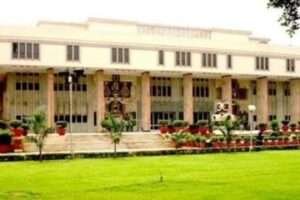
NHRC Orders Cannot Be Challenged in Delhi Merely Because the Commission Sits There, Rules Delhi High Court in Baman Ram Kawasi v. Union of India
Case: Baman Ram Kawasi v. Union of India and Anr.
Citation: 2026:DHC:10253
Date of Judgment: 19 November 2026
Court: High Court of Delhi
Coram: Justice Swarana Kanta Sharma
Proceedings: W.P.(C) 13699/2026
Court Observation
“Even assuming that the passing of the impugned order at New Delhi gives rise to some part of the cause of action within the territorial jurisdiction of this Court, the same is not sufficient to warrant the exercise of writ jurisdiction by this Court, inasmuch as the petitioner, the victims, the place of incident, the authorities concerned and the entire relevant record are all situated in District Sukma, Chhattisgarh.”
Summary
The Delhi High Court has refused to entertain a writ petition challenging a National Human Rights Commission (NHRC) order, holding that the mere fact that the Commission is headquartered in Delhi and passed the order from the national capital does not confer territorial jurisdiction on the court. Justice Swarana Kanta Sharma held that the Chhattisgarh High Court was the appropriate forum, applying the principle of forum conveniens.
The petitioner, Baman Ram Kawasi, an Adivasi man from village Chitlanar in Sukma district, Chhattisgarh, alleged that Christian Adivasi families who had practised Christianity for about 18 years were threatened with violence and forced to leave their homes after refusing to convert to Hinduism. On 5 March 2026 a mob allegedly entered their homes, two members of the community — Santa Barse and Ayte Barse — were assaulted with sticks and hospitalised, and the families were threatened with death and forced to leave, since living in makeshift shelters in Sukma town. After complaints to the police and district administration, Kawasi approached the NHRC on 4 June 2026 (Case No. 219/33/20/2026). On 9 June 2026 the Commission disposed of the complaint by forwarding it to the District Magistrate and Superintendent of Police, Sukma, with directions to take appropriate action within eight weeks. Kawasi asked the Delhi High Court to treat the NHRC’s order as an interim direction rather than a final disposal and to direct fresh consideration of his complaint with an opportunity of hearing. The Union government opposed the plea, arguing the entire cause of action had arisen in Sukma.
Key Holdings
- Merely because the NHRC passed its order from its headquarters in Delhi, it would not confer territorial jurisdiction on the Delhi High Court to examine a challenge to the NHRC’s decision.
- Even assuming that passing the order in New Delhi gives rise to some part of the cause of action within the court’s territorial jurisdiction, that alone is not sufficient to warrant the exercise of writ jurisdiction where the petitioner, the victims, the place of incident, the authorities concerned and the entire relevant record are all situated in Sukma, Chhattisgarh.
- The NHRC had merely acted as a channel by forwarding the complaint to the very local authorities at Sukma against whom the grievance was directed; the impugned order did not adjudicate upon any right or claim of the petitioner.
- Accepting the petitioner’s argument would mean that every NHRC order concerning an incident anywhere in the country could be challenged before the Delhi High Court merely because the Commission is headquartered in the national capital.
- On the principle of forum conveniens, the High Court of Chhattisgarh has the most direct and substantial connection with the lis and is most appropriately placed to examine the grievance.
Directions Issued
- The writ petition (with pending applications, if any) stands dismissed for want of territorial jurisdiction and on the principle of forum conveniens.
- The petitioner is at liberty to approach the appropriate forum, including the High Court of Chhattisgarh, with all rights and contentions left open.
Background
The alleged incidents took place on 5 March 2026 in village Chitlanar, Sukma district, Chhattisgarh. Kawasi’s NHRC complaint (Case No. 219/33/20/2026) was filed on 4 June 2026 under Sections 12, 13, 17 and 18 of the Protection of Human Rights Act, 1993, and was disposed of by the Commission on 9 June 2026 by transmitting it to the District Magistrate and Superintendent of Police, Sukma, with an eight-week direction. The writ petition was heard and reserved on 18 September 2026 and pronounced on 19 November 2026.
Related Articles
- Tribunal Decisions Can Be Scrutinized Only By A Jurisdictional High Court: Supreme Court
- S.142 NI Act: Supreme Court Clarifies Jurisdiction — Cheque Dishonour Complaint Must Be Filed Where Payee Maintains Bank Account, Not Place of Presentation
Judgment Link: https://delhihighcourt.nic.in/app/showFileJudgment/SKS19112026CW136992026_180345.pdf
Disclaimer: This is a summary prepared for informational purposes only and does not constitute legal advice. Readers should refer to the official judgment for the authoritative text.