State Cannot Cancel a Concluded Land Sale as “Regime Revenge”, Rules Calcutta High Court in State of Mizoram v. Excel Vincom
Case: State of Mizoram and Others v. Excel Vincom Private Limited and Another
Date of Judgment: 13 November 2026
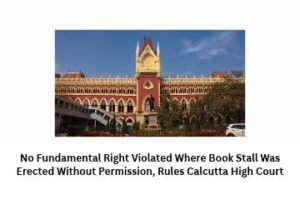
Court: High Court at Calcutta
Coram: Justice Arijit Banerjee and Justice Apurba Sinha Ray
Proceedings: FMA 772 of 2024
Court Observation
“It does appear to us that this is a case of ‘regime revenge’. The Government cannot renege on a promise made and acted upon by a citizen to his detriment, only because there is a change in regime.”
Summary
The Calcutta High Court has held that the Government of Mizoram could not cancel the sale of its Kolkata property merely because a new government had taken charge, calling the cancellation a case of “regime revenge” and directing the State to execute the sale deed within eight weeks. The land at 24, Ashutosh Chowdhury Avenue, Ballygunge, Kolkata, was bought by the Government of Mizoram in 1973 and housed the State’s guest house and Kolkata offices. In May 2023 the State floated an e-tender-cum-e-auction for the land; Excel Vincom Private Limited emerged as the highest bidder, an agreement for sale was signed on 6 October 2023, and the company paid the full consideration of about Rs. 38.3 crore along with penalty money for a delayed instalment, which the State accepted without reservation.
After a new government took charge in December 2023, the State cancelled the entire e-tender process on 4 January 2024 and refunded the money. A Single Judge allowed the company’s writ petition on 2 April 2024, set aside the cancellation and directed execution of the sale deed within six weeks. On appeal, the Division Bench held that a binding contract had come into existence, that the only reason the conveyance had been deferred was the coming election, and that the State had shown no public interest — far less overwhelming public interest — that could justify the cancellation. The cancellation was unfair, unjust, arbitrary and flagrantly violative of Article 14 of the Constitution.
Key Holdings
- Where the State has accepted the full sale price and penalty money without reservation and the terms of the agreement for sale have been substantially performed, it cannot unilaterally call off the contract.
- A change of regime alone cannot justify a government reneging on a promise made and acted upon by a citizen to his detriment.
- When the State enters a contract, it remains bound by Article 14 and must act fairly, justly and reasonably.
- No public interest was demonstrated that could justify cancelling the tender process, and the State’s reliance on the election period as the reason for the delay could not support the cancellation.
Directions Issued
- The appeal is dismissed with no order as to costs.
- The time for the State to comply with the Single Judge’s order — to execute and help register the sale deed — is extended by eight weeks.
Background
The Government of Mizoram bought the Ballygunge land in 1973; it housed the State’s guest house, its Kolkata offices and the State’s emporium. In May 2023, the State invited e-tenders for the sale of the land. Excel Vincom Private Limited emerged as the highest bidder and signed an agreement for sale on 6 October 2023. The company paid the full consideration of about Rs. 38.3 crore along with penalty money for a delayed instalment, which the State accepted without reservation. After the new government took charge in December 2023, the State cancelled the entire e-tender process on 4 January 2024 and refunded the money.
Related Articles
- Calcutta High Court states that arranging groups in the tender process with clear distinctions is acceptable; it shouldn’t be criticized just because it may not be convenient for all bidders
- No binding contract exists during tender participation; the process can be canceled before the issuance of an acceptance letter: J&K High Court
Judgment Link: Read the full judgment (PDF)
Disclaimer: This is a summary prepared for informational purposes only and does not constitute legal advice. Readers should refer to the official judgment for the authoritative text.